Harvey Keitel: A Master Class in Film & Acting
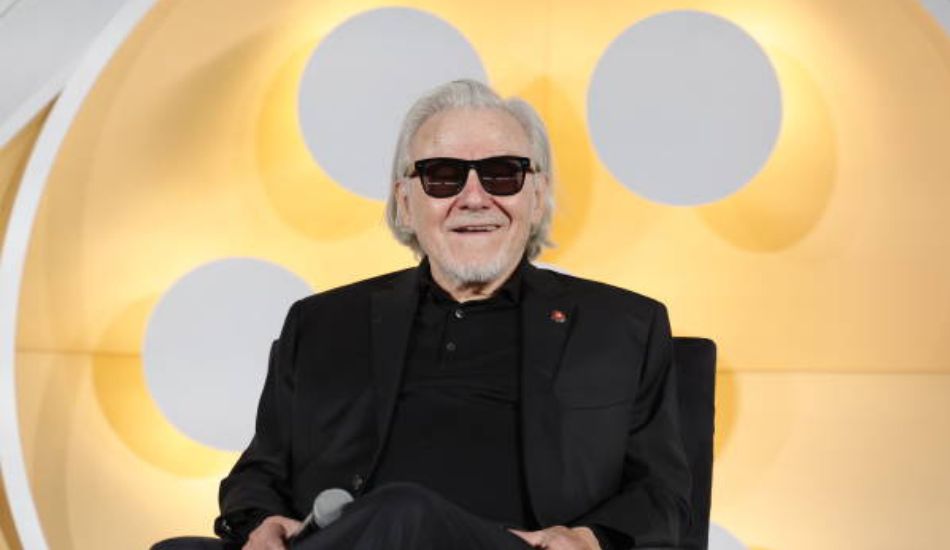
When we explore the artistry of Harvey Keitel, we uncover a career that spans decades, genre defying roles, and collaborations with some of cinema’s most visionary directors. Known for his intense presence, razor-sharp charisma, and a willingness to dive into morally complex characters, Keitel has become a touchstone of serious film performance. In this comprehensive article, we examine his age and background, trace his education, chart his major movies in order, explore his work in TV shows, analyze his role in Inglourious Basterds, and highlight his most celebrated performances—including Taxi Driver—while also taking a look at his net worth and early life.
Early Life: Who Is Harvey Keitel?
Harvey Keitel was born on May 13, 1939, in Brooklyn, New York. He emerged from a modest working-class family with Jewish roots; his upbringing in Brighton Beach and Coney Island shaped his worldview and later, his screen presence. From a young age, he exhibited a strong sense of ambition, gravitating toward the arts and performance scenes in New York.
His early years were marked by neighborhood toughness but also by intellectual curiosity. He worked odd jobs, including driving a truck and being a bank guard, all while nurturing his desire to act. These lean years established the discipline and resilience that would underpin his acting career.
Harvey Keitel Age and Background
As of this writing, Harvey Keitel is 86 years old, yet his spirit and screen presence remain youthful and vigorous. His background is equally fascinating: born in 1939, he started off in the New York avant-garde theatre scene during the 1960s. A hallmark of his early background is his involvement with the experimental director Jonas Mekas, and work in off-beat films that gave him the craft edge many mainstream actors lacked.
This background paved the way for his future collaborations with eclectic directors like Martin Scorsese, Quentin Tarantino, and Abel Ferrara. His sturdy foundation—combined with his background of grit and street-smarts—helped him cultivate a unique identity within cinema.
Harvey Keitel Education
While often what counts most in acting is experience and innate talent, Keitel’s formal education played a supporting role. He studied acting with the legendary teacher Lee Strasberg at the Actors Studio in New York, where he immersed himself in method-acting techniques. This exposure to rigorous training enabled him to build nuanced characters, handle intense emotional arcs, and develop an on-screen magnetism that few could rival.
Beyond that, his time in off-off-Broadway and experimental theatre honed his craft further. The intense rehearsal schedules, close-knit ensemble-building, and fearless risk-taking of the theatre world translated directly into his film work. Through this route, Keitel forged a foundation of discipline, depth, and a readiness to take on challenging, sometimes controversial roles.
Harvey Keitel Movies in Order
Mapping out Keitel’s filmography in a near-chronological order gives insight into his progression and range:
1969: Me & My Brother – One of his earliest ventures into underground film.
1970: Boxcar Bertha – A minor role, yet marked his initial exposure in bigger projects.
1973: Mean Streets – Keitel’s breakthrough with Martin Scorsese, playing “Charlie” alongside Robert De Niro.
1976: Taxi Driver – An iconic role (supporting actor “Sport”/“Matthew”) that anchored his name in cinematic history.
1978: Blue Collar – A gritty, working-class drama showcasing his raw talent.
1992: Reservoir Dogs – Keitel plays “Mr. White,” a professional criminal with a code; Quentin Tarantino’s debut film.
2001: The Pianist – Keitel earned critical acclaim playing Captain Wilmowski opposite Adrien Brody.
2009: Inglourious Basterds – As Colonel Wilhelm Kino, a Nazi film-director officer with haunting presence.
2012: The Grand Budapest Hotel – A cameo appearance in Wes Anderson’s whimsical world.
2019: The Irishman – A matured Keitel in Martin Scorsese’s veteran gangster saga.
This sequence is not exhaustive, but gives a clear arc from early experimental work through his major breakthroughs and into his sustained later-career excellence. Across decades, Keitel has resisted typecasting, embraced challenging roles, and reinvented himself while maintaining a signature depth of performance.
Harvey Keitel Best Movies
While “best” is subjective, several films stand out as pinnacles of Keitel’s craft:
Taxi Driver (1976) – His role may be supporting, but his presence is unforgettable.
Reservoir Dogs (1992) – He elevates the ensemble with moral weight and gravitas.
The Pianist (2001) – A subtle but powerful turn, showing his ability beyond gangster roles.
Inglourious Basterds (2009) – He distills menace, sophistication, and irony in one character.
Blue Collar (1978) – An early standout, capturing labor-struggle dynamics with intensity.
Mean Streets (1973) – The film where his partnership with Scorsese first crystallized.
These titles reflect his versatility—from crime genres to war epics to character-driven dramas—while always delivering a commanding performance. Many critics and film-fans alike point to these as essential viewing for understanding Keitel’s influence and legacy.
Harvey Keitel Young and Early Career
In his younger years, Keitel was part of the New York film underground—films that valued experimentation, raw emotion, and boundary-pushing. He took roles in low-budget productions, supporting avant-garde directors, and even worked behind the scenes as a production assistant and assistant editor. This formative phase instilled a respect for filmmaking craft in all its facets.
Young Keitel was driven by an ambition to be taken seriously—not simply as a star, but as an actor’s actor. He embraced diverse roles: a chauffeur, a crook, the sidekick, the protagonist in lesser known films. It wasn’t until his collaboration with Scorsese on Mean Streets that his career soared into mainstream recognition. That youthful hunger remains visible in his performances decades later.
Harvey Keitel in TV Shows
Although primarily known for his film work, Keitel has appeared in several television productions. Notable examples include:
Mafia Latina (1996, TV Movie) – Keitel plays an undercover agent, displaying his capacity to carry smaller screen productions.
American Playhouse (1984-1993, series) – Guest roles in this anthology series allowed Keitel to explore character work beyond cinema.
Coast to Coast (1987, TV Movie) – A thriller featuring Keitel in a lead role, underscoring his flexibility across media.
His television roles may not attract the same attention as his major films, but they reveal his willingness to experiment, to reach varied audiences, and to work across platforms. For anyone examining his full body of work, these entries provide context and nuance to a career mostly dominated by the big screen.
Harvey Keitel Role in Inglourious Basterds
In Inglourious Basterds (2009), Keitel portrays Colonel Wilhelm Kino, a Nazi cinema-officer who becomes an ironic mirror of the filmmaker’s power. His performance is subtle yet disturbing—evoking charm, menace, and a twisted love of film itself. This role showcases his ability to play layered antagonists with intelligence and complexity.
His interactions with other characters are generative of tension; for example, during the tavern scene, his calm but measured questioning builds dread. He holds the screen without the need for grand gestures—his trained presence and method-acting pedigree do the heavy lifting. This portrayal stands out as a late-career highlight, reinvigorating his presence in blockbuster-adjacent art-films and reminding audiences why he remains a premiere character actor even decades into his career.
Stella Keitel and Family Background
Beyond his professional life, Keitel’s personal life merits mention. One of his children, Stella Keitel, has pursued her own path in the arts, reflecting the creative lineage extended from Harvey Keitel himself. While he keeps his private life discrete, his role as a father and mentor underlines the human dimension behind the on-screen persona.
His family background—working-class immigrant roots, early day jobs, and no guaranteed path to fame—speaks to Keitel’s authenticity and relatability. For emerging actors studying his journey, the interplay of perseverance, craft-cultivation, and personal integrity emerges as a case study in how raw talent meets rigorous upbringing and commitment.
Harvey Keitel Net Worth
While net worth figures vary among sources, it is widely estimated that Harvey Keitel’s net worth stands in the vicinity of $25 million to $30 million. This figure reflects decades of steady work, but not a Hollywood blockbuster star’s scale of earnings. Indeed, Keitel’s career has often chosen bold, independent films over big-budget action vehicles, which may have limited his top-line potential but reinforced his reputation as a serious, committed actor.
His earnings stem from recurring collaborations, film credits, occasional production roles, and residuals from widely watched films. For those analyzing the economics of acting careers, his trajectory shows how dedication to craft can build stable success without needing headline-making box-office stardom.
Harvey Keitel’s Legacy and Impact
As we assess his legacy, it is clear that Harvey Keitel occupies a unique niche: he is not simply a star whose name sells tickets, but a trusted presence whose involvement elevates projects. Directors know he brings intensity, nuance, and dependability. His performances carry weight not because of flashy gimmicks, but because of his command of character, moral ambiguity, and visual presence.
Actors and filmmakers often cite him as an influence because he shows how to build a career through sincerity, careful role-selection, and an enduring commitment to storytelling. His involvement in pivotal films—Mean Streets, Taxi Driver, Reservoir Dogs, Inglourious Basterds—ensures his work will be studied in film schools and appreciated in retrospectives long after current trends fade.
Conclusion
We hope this deep dive into Harvey Keitel’s life and career has illuminated the full measure of his contribution to cinema. From his humble Brooklyn origins, through rigorous training and early experimental work, to major films that defined generations, his journey is one of grit, precision, and artistic integrity. Whether discussing his education, his standout performances, his television ventures, or his legacy and net worth, Keitel remains one of the most compelling figures in film history. For more insightful articles on film and entertainment, visit Chopmagazine.com and dive into our archive of in-depth profiles and analyses.